
Low-cost underwater parabolic microphone for locating sperm whales by the direction of their echolocation clicks.
A directional hydrophone is especially useful for locating sperm whales because it lets you precisely determine the direction of their echolocation clicks, which are very intense and broadband. This is key for planning safe approaches, deploying scientific tags, or recording behaviour without unnecessary disturbance.
The first prototype was built and tested in the Strait of Gibraltar. Since then the design has been refined in the field in Greenland, and a third iteration is now in development, building on that accumulated experience.
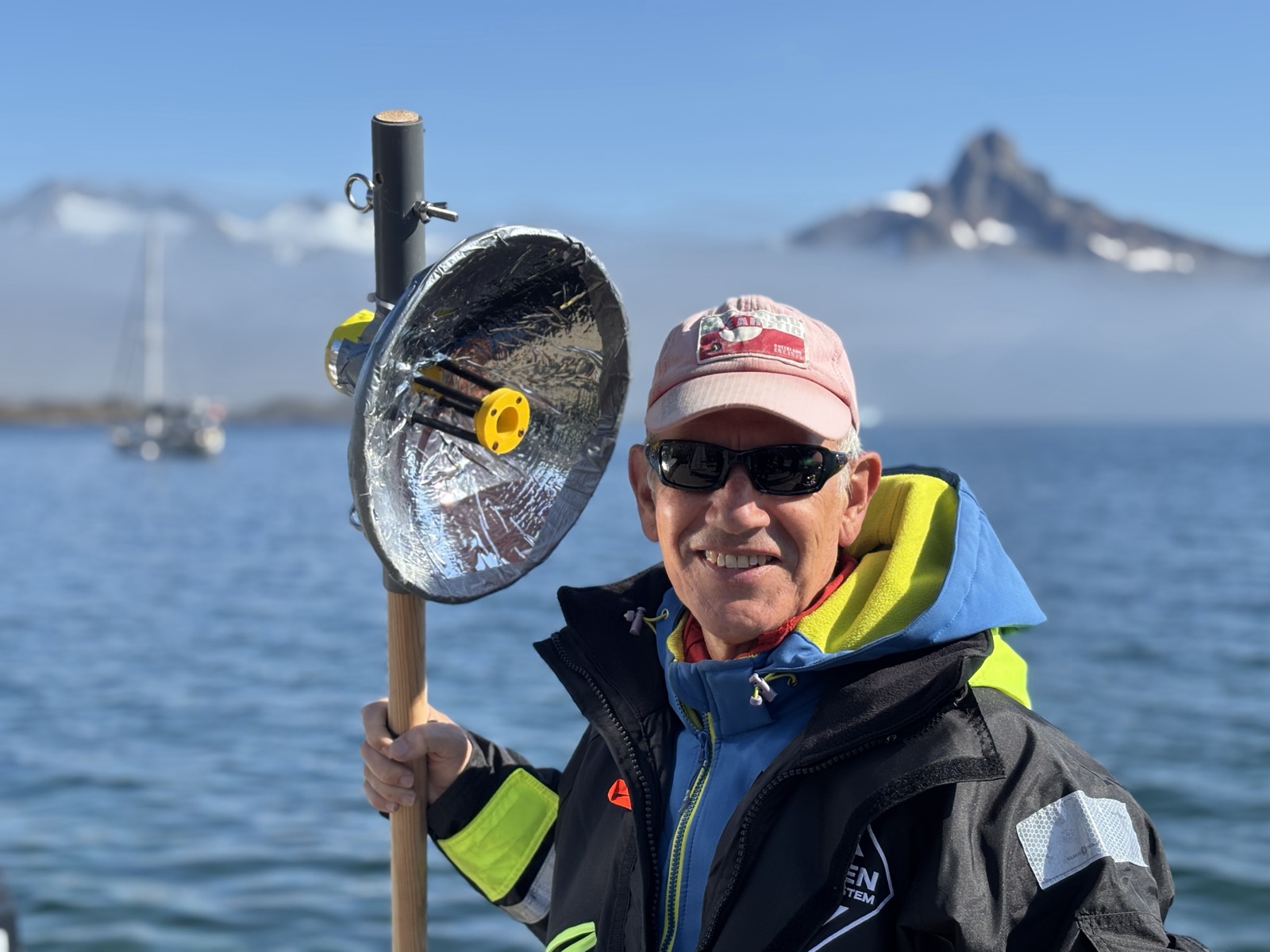
A parabolic microphone mounts a sensor element at the focus of a parabolic reflector. Any sound wave arriving along the axis of symmetry, regardless of where it hits the dish, reflects toward that same focal point — producing significant acoustic gain and, above all, directivity: gain drops off sharply for sound arriving off that axis, attenuating noise that competes with the target signal.
A parabolic microphone's gain scales with the square of the frequency (rising 6 dB per octave), and the dish shape is fully determined by the ratio between its focal length and diameter (f/D): deep dishes have a short focal length, shallow dishes a long one.
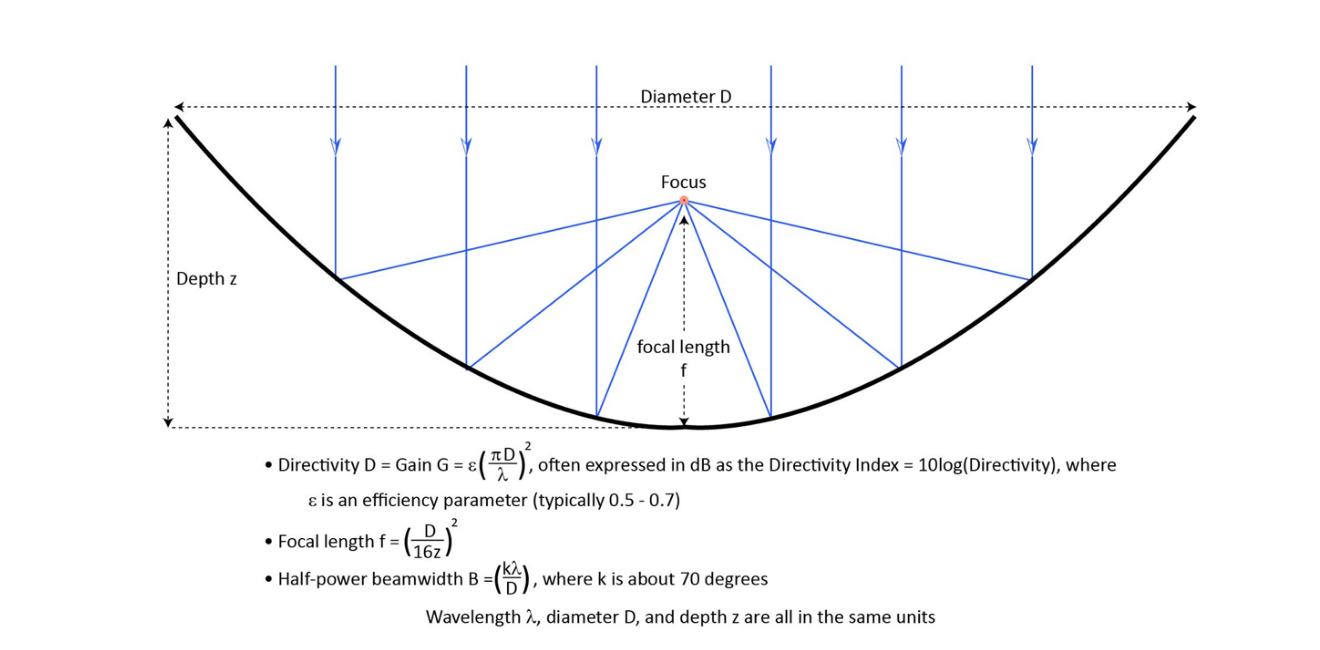
Sperm whale echolocation clicks range from 10 kHz to 200 kHz and last only fractions of a millisecond. Underwater they behave differently than in air: sound travels at ~1,500 m/s versus ~343 m/s in air, high frequencies attenuate less, and refraction can occur when crossing media — all of which require adjusting the dish design relative to a conventional in-air parabolic microphone.
For a 30 cm diameter dish optimized for these frequencies, the focal distance works out to about 5.6 cm, giving an optimal dish depth of roughly 10 cm — the value used in building the prototype.
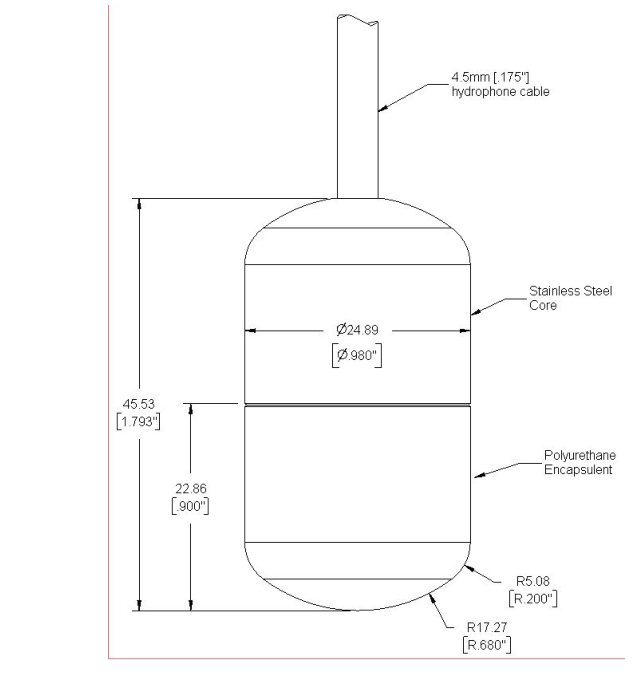
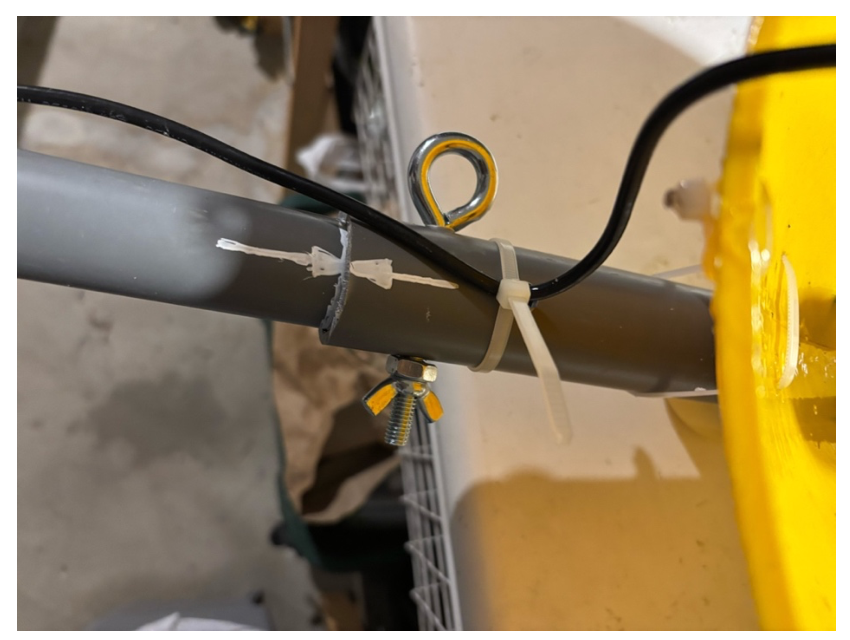
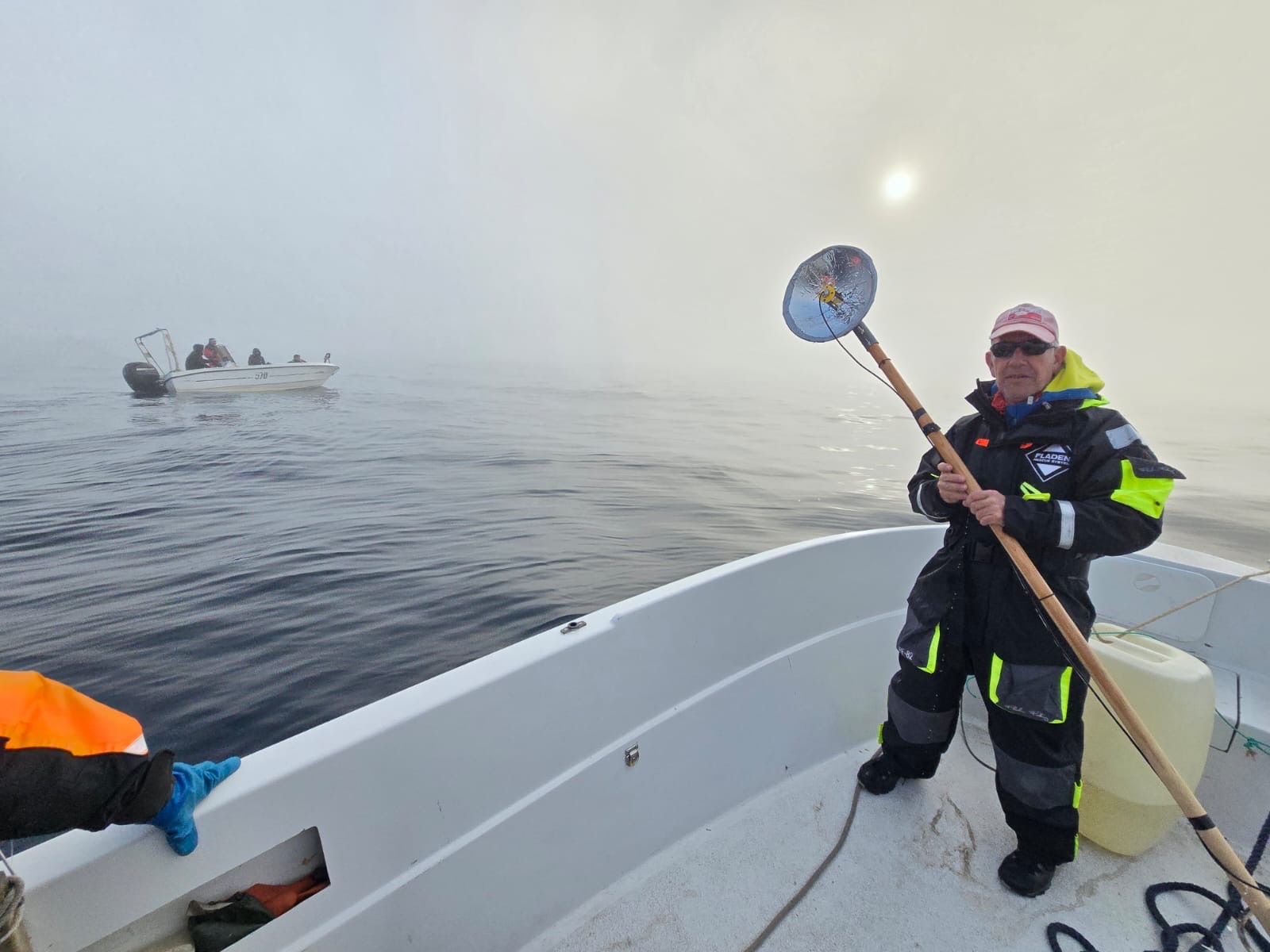
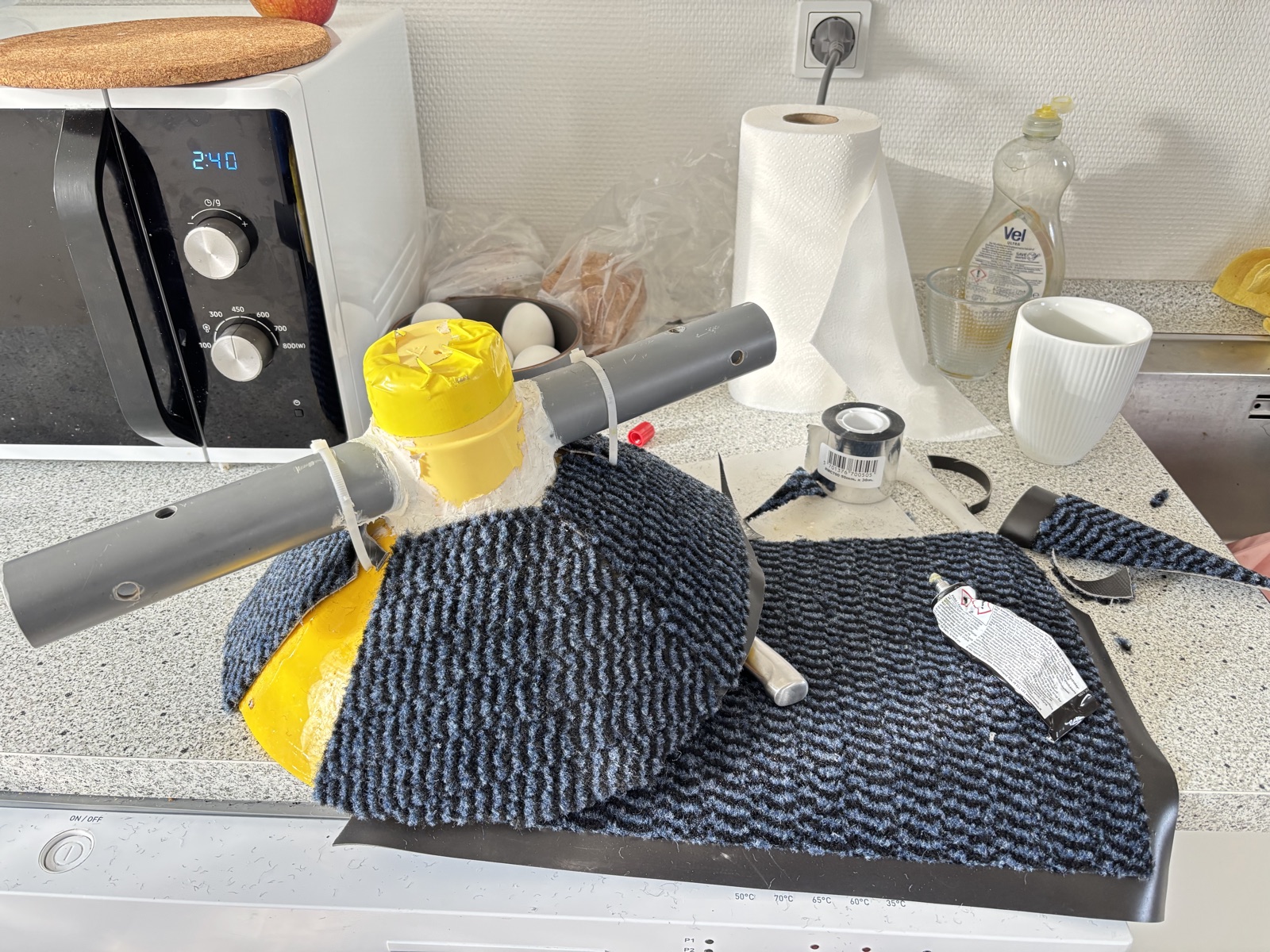
The sensor is an Aquarian H2D hydrophone. Both the hydrophone mount and the parabolic dish itself were CAD-designed and 3D printed in PLA; since the 30 cm diameter exceeds the available print volume, the dish was split into four separately printed sectors and joined afterward. The mast holding the assembly is plumbing PVC pipe, designed to come apart for easy transport.
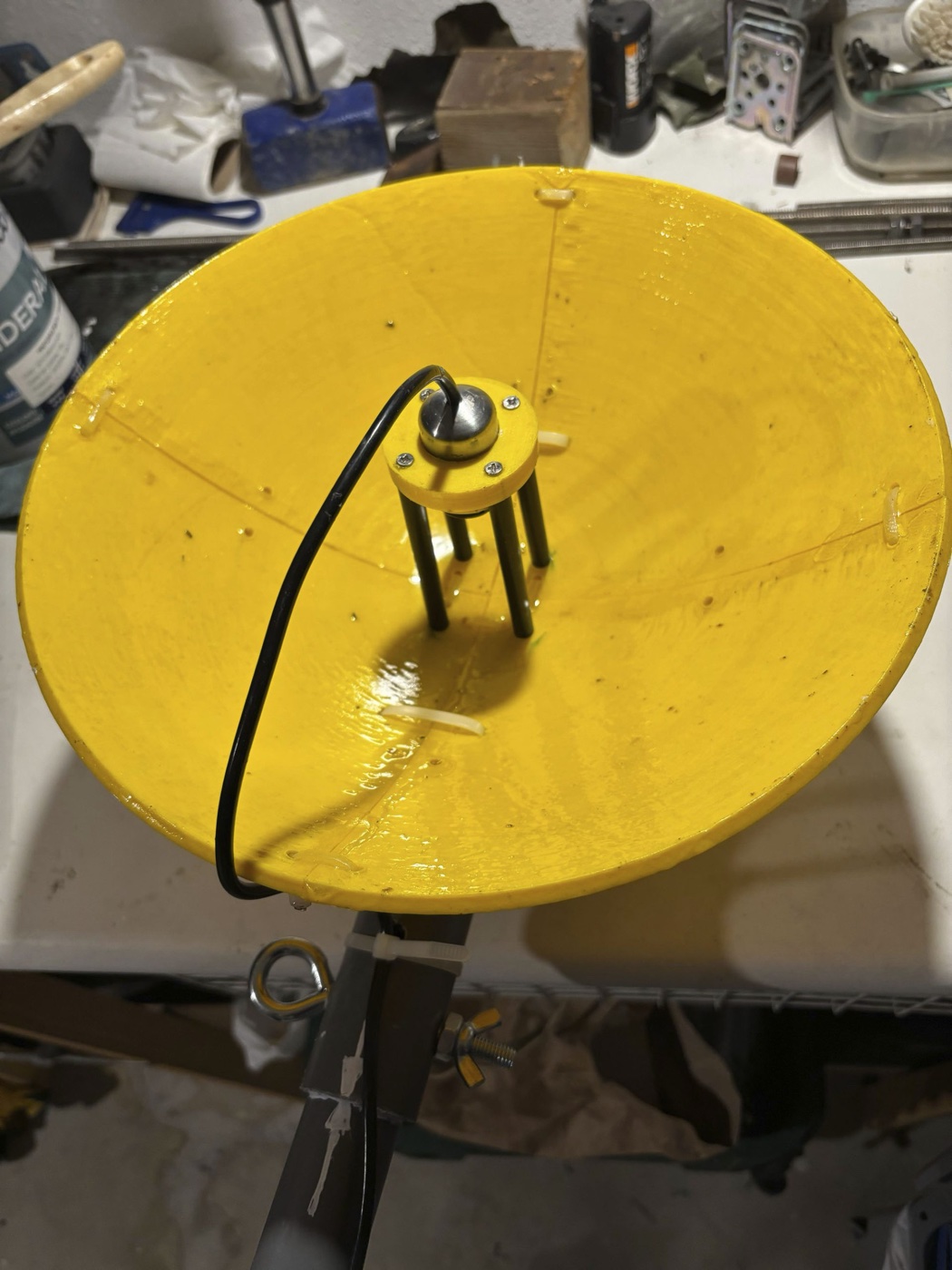
Before trusting a printed dish, it's worth checking its curve is truly parabolic. A simple method is to measure the diameter and depth, calculate the theoretical focal length, and compare the expected depth at several radial distances against the actual measurements. If the dish is reflective, there's a faster shortcut: slide a flashlight's beam along the central axis until the whole surface lights up evenly at once — that point is the dish's real focus.
The first prototype, the one shown in this page's photos, was built and used on campaigns in the Strait of Gibraltar in collaboration with CIRCE. Hands-on use at sea led to refining the design during fieldwork in Greenland, adjusting mounting and handling details learned from real deployments. With that second iteration already tested, a third version is now being designed, folding in everything learned from both campaigns.
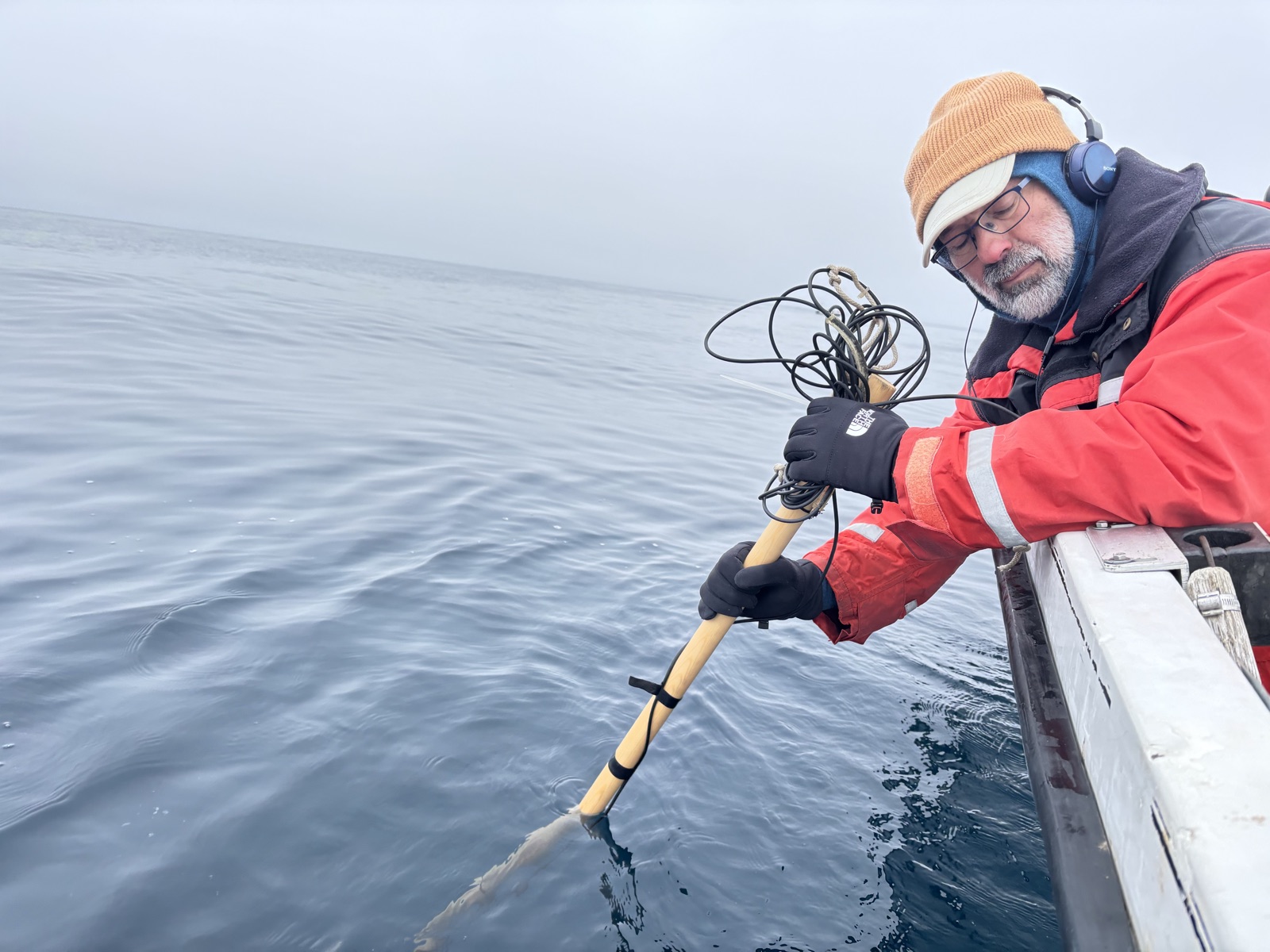
During the latest expedition to eastern Greenland, the directional hydrophone was field-tested at sea, in collaboration with the Greenland Institute of Natural Resources, aiming to check whether sperm whale clicks could be heard and their bearing used to steer the search from the boat. Results were positive: the system clearly detected the acoustic emissions and allowed the boat to home in on the animals with reasonable accuracy, though controlled tests are still needed to formally quantify angular error.
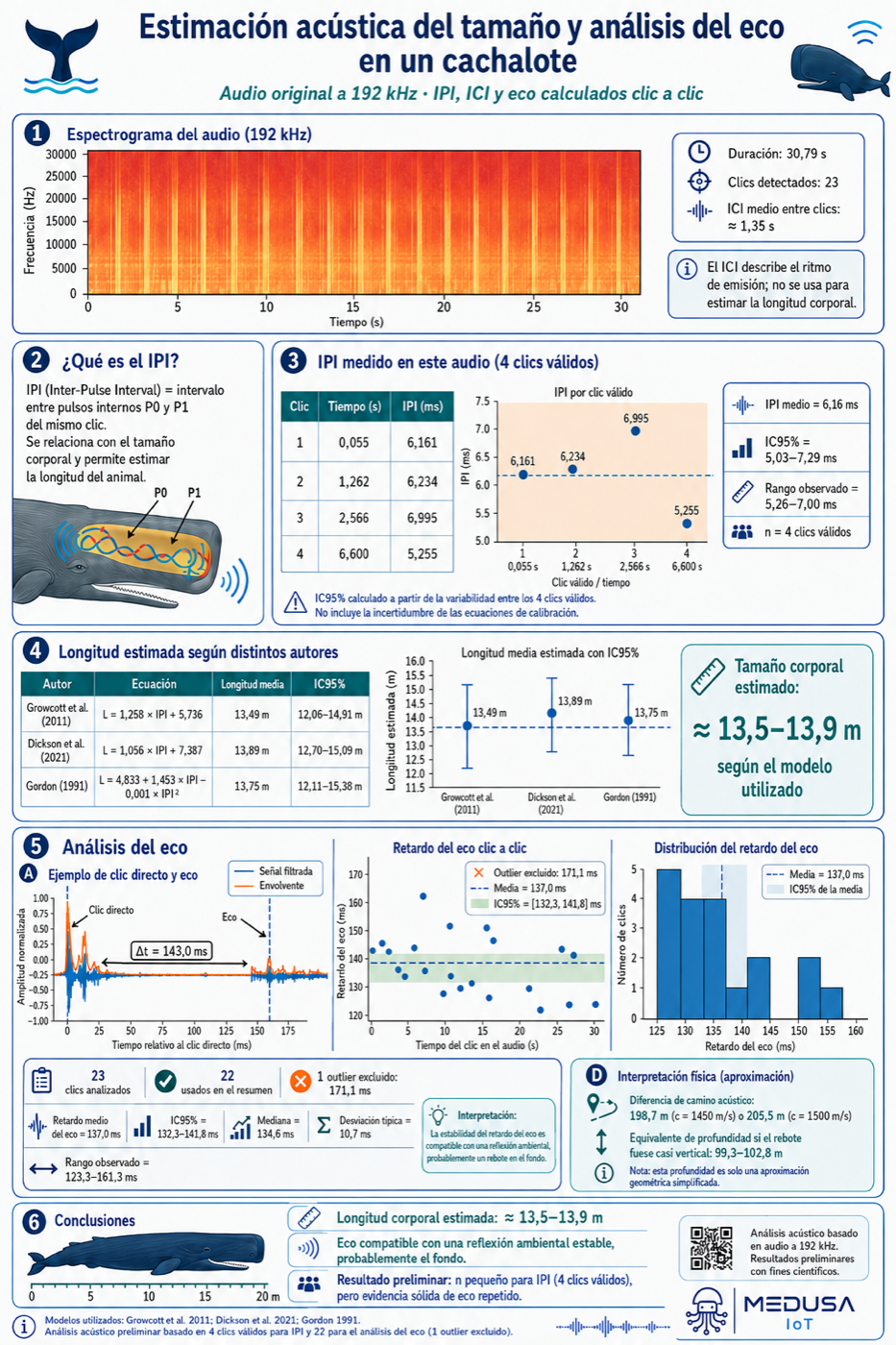
In one recording, taken at 192 kHz, 23 sperm whale clicks were detected over roughly 31 seconds. By analyzing the internal click structure and measuring the IPI (Inter-Pulse Interval), body length was estimated using models published in the scientific literature, yielding a range of 13.5–13.9 meters. This is a preliminary acoustic estimate, but it confirms the potential of this kind of recording to obtain biological information without approaching the animal.
The next step is to keep improving the system and increase its precision for future research campaigns.